
Monaco Grand Prix F1 Race Facts
Introduction
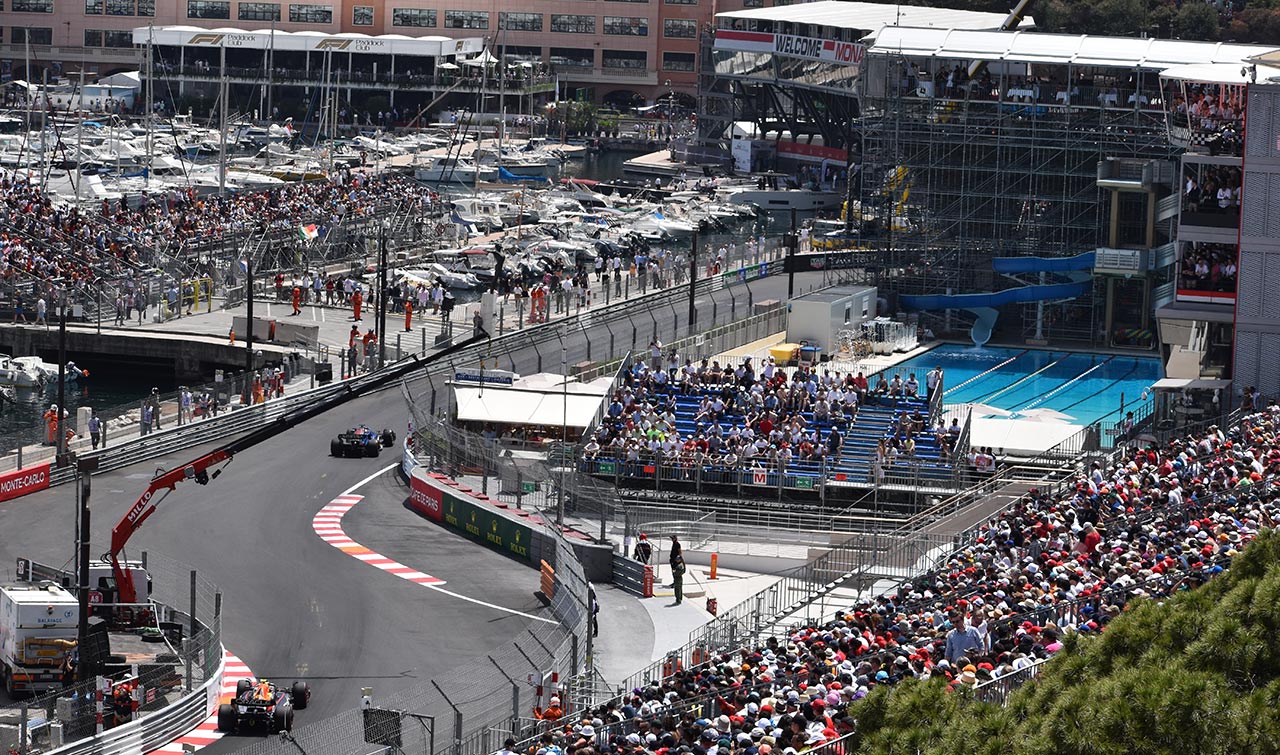
Few sporting events anywhere in the world carry the prestige, glamour and history of the Monaco Grand Prix. Nestled amongst the streets of Monte Carlo, overlooking the Mediterranean Sea and surrounded by luxury yachts, five-star hotels and iconic casinos, the race has become synonymous with Formula 1 itself.
First held in 1929, the Monaco Grand Prix has grown into one of the most famous motor racing events on the planet. It is one of the three races that make up the prestigious Triple Crown of Motorsport, alongside the Indianapolis 500 and the 24 Hours of Le Mans.
Unlike modern Formula 1 circuits that feature wide run-off areas and expansive overtaking zones, Monaco remains almost unchanged from its original layout. Drivers race between barriers with little room for error, making precision, concentration and bravery more important than outright speed.
Whether you’re a lifelong Formula 1 fan or considering experiencing the event through a luxury Monaco Grand Prix hospitality package, these fascinating facts explain why Monaco continues to stand above every other race on the Formula 1 calendar.
The Monaco Grand Prix First Took Place in 1929
The very first Monaco Grand Prix was organised by Antony Noghès with support from Prince Louis II of Monaco. William Grover-Williams won the inaugural race driving a Bugatti, establishing an event that would become one of motorsport’s greatest traditions.
Remarkably, the race still follows many of the same streets first used almost a century ago, making Monaco one of the oldest continuously recognised Grand Prix events in the world.
It Is Part of Motorsport’s Triple Crown
Only three races are generally recognised as forming the Triple Crown of Motorsport:
- Monaco Grand Prix
- Indianapolis 500
- 24 Hours of Le Mans
Winning all three events is considered one of the greatest achievements in motor racing. Only one driver, Graham Hill, has officially completed the Triple Crown, cementing his legendary status within the sport.
The Circuit Is Almost Entirely Public Roads
Perhaps the most remarkable aspect of Monaco is that the circuit isn’t a permanent race track.
For most of the year the roads are open to normal traffic. Days before the Grand Prix, thousands of workers transform ordinary streets into one of the world’s most famous Formula 1 circuits.
Crash barriers, grandstands, fencing, pedestrian bridges and hospitality suites are assembled in an enormous logistical operation before being removed once the event has finished.
Monaco Is the Slowest Race on the Formula 1 Calendar
Despite featuring some of the world’s fastest racing cars, Monaco is actually the slowest Formula 1 race of the season.
Average lap speeds are significantly lower than at circuits such as Monza or Silverstone because drivers must negotiate:
- Hairpins
- Chicanes
- Narrow streets
- Tight elevation changes
Rather than rewarding outright horsepower, Monaco rewards precision and confidence.
The Fairmont Hairpin Is Formula 1’s Slowest Corner
Formerly known as Loews Hairpin, today’s Fairmont Hairpin is the slowest corner in Formula 1.
Drivers slow to around 30 mph (50 km/h) while applying almost full steering lock.
Watching modern Formula 1 cars negotiate such a tight bend demonstrates the incredible engineering that allows these cars to turn through spaces barely wider than the vehicles themselves.
Ayrton Senna Holds the Record for Most Monaco Victories
When people think of Monaco, they often think of Ayrton Senna.
The Brazilian legend won the Monaco Grand Prix six times, including an extraordinary run of five consecutive victories between 1989 and 1993.
His qualifying laps around Monaco are still regarded by many experts as among the greatest performances ever produced by a Formula 1 driver.
Even decades later, many corners around the circuit remain closely associated with Senna’s legendary skill and commitment.
Pole Position Is Often More Important Than Anywhere Else
Because overtaking is so difficult around Monaco, qualifying is frequently more important than the race itself.
Drivers regularly describe Saturday qualifying as the most intense session of the entire Formula 1 season.
A single mistake can ruin an entire weekend, while securing pole position dramatically increases the chances of standing on the top step of the podium on Sunday.
This unique characteristic makes Monaco qualifying one of the most watched sessions of every Formula 1 season.
The Monaco Tunnel Is Formula 1’s Most Famous Tunnel
One of the defining features of the Monaco Grand Prix is the iconic tunnel beneath the Fairmont Monte Carlo hotel. It is the only tunnel used on the Formula 1 calendar, creating a dramatic transition as drivers accelerate from bright Mediterranean sunshine into darkness before emerging at over 170 mph (275 km/h) towards the harbour chicane.
The sudden change in lighting, combined with the high speeds and close barriers, makes this section one of the most technically demanding parts of the circuit. For spectators watching from hospitality terraces overlooking the harbour, it is one of the most spectacular sights of the weekend.
Monaco Has Hosted Formula 1 Since the Championship Began
The Monaco Grand Prix has been part of the Formula 1 World Championship since the inaugural season in 1950. While there have been a handful of exceptions over the decades, Monaco has remained one of the sport’s most cherished venues.
Its place on the calendar has become almost untouchable, with drivers, teams and fans recognising it as one of the true highlights of every Formula 1 season.
Luxury Yachts Become Floating Hospitality Suites
Nowhere else in Formula 1 offers an atmosphere quite like Monaco Harbour during race weekend.
Hundreds of luxury yachts line Port Hercule, creating one of the world’s most exclusive sporting environments. Many of these yachts are transformed into premium hospitality venues where guests enjoy gourmet dining, champagne, live entertainment and exceptional views of the circuit.
For many visitors, yacht hospitality represents the ultimate way to experience the Monaco Grand Prix, combining world-class racing with luxury that simply cannot be replicated at any other sporting event.
The Monaco Grand Prix Attracts Royalty and Global Celebrities
The race has long been a favourite gathering place for royalty, Hollywood stars, musicians, athletes and business leaders.
Members of Monaco’s Royal Family traditionally attend the event, while celebrities from around the world arrive to enjoy the unique atmosphere both on and off the circuit.
It is not unusual to see Oscar-winning actors, world-famous musicians, Olympic champions and Formula 1 legends enjoying the race from balconies overlooking the track or aboard luxury yachts in the harbour.
This blend of motorsport and glamour has become one of Monaco’s defining characteristics.
The Podium Ceremony Is Unlike Any Other
Winning the Monaco Grand Prix is considered one of the greatest honours in Formula 1.
Unlike many other races, the podium overlooks the start-finish straight, with the trophy presentations traditionally involving members of Monaco’s Royal Family.
The backdrop of luxury yachts, the harbour and Monte Carlo’s famous skyline creates one of the most recognisable victory celebrations in world sport.
Many Formula 1 champions have described winning Monaco as a career-defining achievement.
Every Centimetre of the Circuit Demands Precision
Modern Formula 1 circuits often feature generous run-off areas that allow drivers to recover from small mistakes.
Monaco offers no such luxury.
Concrete barriers line almost every metre of the circuit, meaning drivers race with incredible precision from start to finish. Missing an apex by only a few centimetres can result in contact with the barriers and immediate retirement from the race.
This constant pressure explains why Monaco remains one of the toughest physical and mental challenges in motorsport.
Monaco Offers Some of the World’s Best Hospitality Experiences
Although the racing itself is legendary, many visitors travel to Monaco for far more than the Grand Prix alone.
The event has evolved into one of the world’s premier luxury sporting experiences, offering guests access to:
- VIP trackside terraces
- Luxury yacht hospitality
- Exclusive hotel balconies
- Fine dining experiences
- Champagne receptions
- Corporate entertaining
- Private transfers
- Five-star accommodation
Many hospitality packages also include panoramic views of several sections of the circuit, allowing guests to enjoy the race while experiencing the exceptional service for which Monaco has become internationally renowned.
For businesses, Monaco remains one of the most prestigious corporate hospitality events in the world, providing an unrivalled setting for entertaining clients, rewarding employees or networking with international guests.
Overtaking Is Exceptionally Difficult
One of the reasons the Monaco Grand Prix is so fascinating is that overtaking opportunities are extremely limited. The narrow streets leave little room for drivers to attempt passes without taking significant risks.
Instead, races are often won through:
- Outstanding qualifying performances
- Clever race strategy
- Perfect tyre management
- Well-timed pit stops
- Maintaining concentration for every lap
This places enormous emphasis on teamwork between the driver, race engineer and pit wall throughout the weekend.
Every Lap Requires Complete Concentration
Drivers often describe Monaco as the most mentally demanding race of the Formula 1 season.
Unlike circuits with long straights that offer brief moments to relax, Monaco demands total focus from start to finish. Drivers make thousands of steering inputs during the race while constantly braking, accelerating and changing direction through the tight streets.
One small lapse in concentration can instantly end an otherwise perfect weekend.
The Monaco Grand Prix Generates Millions for the Local Economy
Race weekend transforms the Principality.
Hotels operate at exceptionally high occupancy, restaurants are fully booked, luxury retailers enjoy increased business, and thousands of visitors arrive from around the world.
The event provides a major boost to Monaco’s tourism and hospitality industries every year, reinforcing its reputation as one of Europe’s premier luxury destinations.
Many visitors also extend their stay to explore Monte Carlo’s famous casino, Michelin-starred restaurants, designer boutiques and stunning Mediterranean coastline.
Monaco Is a Bucket-List Event for Formula 1 Fans
Ask almost any Formula 1 supporter which race they most want to attend and Monaco will usually feature near the top of the list.
The appeal extends far beyond the racing itself. Visitors experience:
- Historic streets filled with Formula 1 history
- Superyachts lining Port Hercule
- Luxury hotels and rooftop terraces
- The glamorous nightlife of Monte Carlo
- Some of the world’s finest restaurants
- An atmosphere unlike any other sporting event
For many guests, attending Monaco is a once-in-a-lifetime experience that creates memories lasting long after the chequered flag has fallen.
The Circuit Has Barely Changed in Nearly a Century
Although Formula 1 technology has evolved dramatically, the layout of the Circuit de Monaco has remained remarkably faithful to its original design.
Many of the corners made famous by legendary drivers are still instantly recognisable today, including:
- Sainte Dévote
- Beau Rivage
- Casino Square
- Mirabeau
- Fairmont Hairpin
- Portier
- The Tunnel
- Nouvelle Chicane
- Tabac
- Swimming Pool
- La Rascasse
- Anthony Noghès
Few sporting venues in the world offer such a direct connection between modern competition and historic tradition.
Winning Monaco Defines Careers
Drivers often say there are three races every Formula 1 driver dreams of winning:
- Monaco
- Silverstone
- Monza
Yet Monaco is frequently regarded as the crown jewel.
The names of Monaco winners read like a who’s who of Formula 1 history, with champions such as Graham Hill, Alain Prost, Ayrton Senna, Michael Schumacher, Lewis Hamilton and Max Verstappen all adding their names to the famous winners’ list.
For many drivers, a Monaco victory carries a prestige that goes beyond championship points. It represents mastery of one of the most demanding circuits in world motorsport and secures a lasting place in Formula 1 history.
Conclusion
The Monaco Grand Prix is far more than a Formula 1 race. It is a celebration of motorsport history, engineering excellence, luxury travel and unforgettable experiences.
From its origins in 1929 to its status as the sport’s most glamorous event, Monaco continues to captivate millions of fans around the world. Its combination of challenging street racing, breathtaking scenery and world-class hospitality has created an event unlike any other on the Formula 1 calendar.
Whether you dream of watching the action from a luxury yacht, an exclusive trackside terrace or a private balcony overlooking Monte Carlo, the Monaco Grand Prix offers an experience that perfectly blends sporting drama with exceptional hospitality.
At Grand Prix Adventures, we specialise in premium Monaco Grand Prix hospitality packages, helping guests experience one of the world’s greatest sporting events in comfort, style and luxury.