
History Of The Marina Bay Street Circuit In Singapore
The Marina Bay Street Circuit in Singapore has become one of the most iconic and recognisable venues in modern Formula One. Famous for its spectacular night race, dramatic city skyline, challenging street layout, and glamorous atmosphere, the Singapore Grand Prix has established itself as one of the standout events on the F1 calendar since its debut in 2008.
Set against the backdrop of one of Asia’s most modern and vibrant cities, the Marina Bay Street Circuit combines high-speed straights, technical corners, and unforgiving barriers to create one of the toughest tests in motorsport. Drivers, teams, and fans all recognise Singapore as one of the most physically demanding and visually impressive races in the world.
The history of the Marina Bay Street Circuit is not just about Formula One itself, but also about Singapore’s rise as a global sporting destination and the city’s ambition to showcase itself on the world stage.
The Origins Of Formula One In Singapore
Although the modern Singapore Grand Prix began in 2008, motorsport in Singapore actually dates back much further. During the 1960s and early 1970s, the country hosted the Singapore Grand Prix at the Thomson Road Circuit, a dangerous street circuit located on public roads. The event attracted regional racing drivers and gained popularity across Asia.
However, due to increasing safety concerns and several fatal accidents, racing at Thomson Road was eventually discontinued in 1973. For many years afterwards, Singapore had no major international motorsport events.
As Formula One continued expanding globally during the 1990s and early 2000s, discussions began regarding the possibility of bringing F1 back to Singapore. The country’s strong economy, world-class infrastructure, and growing tourism industry made it an attractive option for Formula One Management.
Eventually, plans were approved for a completely new style of event — a Formula One race held at night through the heart of Singapore’s Marina Bay district.
The Birth Of The Marina Bay Street Circuit
The Marina Bay Street Circuit was officially introduced to Formula One in 2008. The circuit was designed by renowned Formula One track architect Hermann Tilke in collaboration with local planners and engineers.
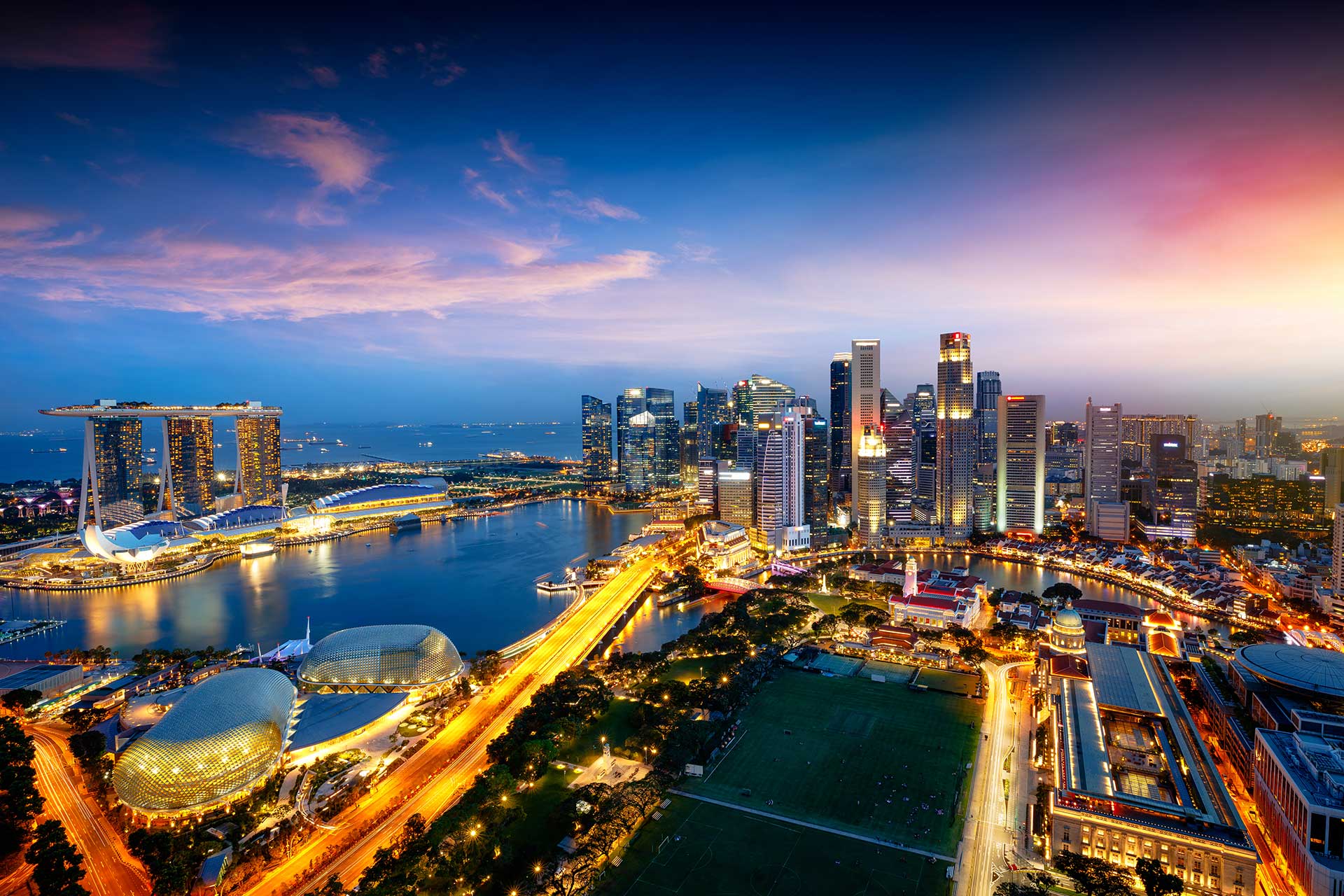
Unlike purpose-built racetracks, the Marina Bay Street Circuit uses public roads that are transformed into a racing circuit each year. The streets around Marina Bay, the Singapore Flyer, Esplanade, and the financial district become part of a high-speed Formula One venue.
One of the most revolutionary aspects of the project was the decision to hold the race at night. Formula One had never staged a full night race before, making Singapore a historic first for the sport.
The race would still take place at a time convenient for European television audiences, while the drivers competed under thousands of powerful floodlights illuminating the circuit. The result was a visually stunning event that immediately became one of Formula One’s signature races.
The First Singapore Grand Prix In 2008
The inaugural Singapore Grand Prix took place on 28 September 2008 and instantly made Formula One history. Thousands of lighting projectors illuminated the entire circuit, creating a spectacular scene unlike anything previously seen in motorsport.
The race itself became one of the most controversial in Formula One history due to the infamous “Crashgate” scandal involving Renault driver Nelson Piquet Jr. During the race, Piquet deliberately crashed his car to trigger a safety car period, helping teammate Fernando Alonso gain a strategic advantage and ultimately win the race.
Although the controversy overshadowed the event years later, the success of the night race concept was undeniable. Fans around the world were captivated by the atmosphere, city skyline, and unique challenge presented by the Marina Bay Street Circuit.
The Singapore Grand Prix quickly secured its place as one of the premier events on the Formula One calendar.
The Circuit Layout And Challenges
The Marina Bay Street Circuit has undergone several modifications since 2008, but it remains one of the longest and most technically difficult tracks in Formula One.
The original layout featured 23 corners spread across just over 5 kilometres. Drivers race between concrete walls with very little margin for error, meaning concentration levels must remain incredibly high throughout the event.
The combination of tropical heat, humidity, and a race duration often close to the two-hour limit makes Singapore one of the most physically exhausting races of the season. Cockpit temperatures can become extreme, and drivers regularly lose several kilograms in body weight during the race.
Unlike many permanent racetracks, the street surface evolves dramatically throughout the weekend as rubber is laid down. Grip levels change constantly, making setup and tyre strategy particularly important.
Several corners at Marina Bay have become famous over the years, including the tight Turn 10 chicane which was eventually removed, the Anderson Bridge section, and the long straights passing Singapore’s skyscrapers and waterfront landmarks.
Memorable Moments In Singapore Grand Prix History
Since joining Formula One, the Marina Bay Street Circuit has produced numerous memorable races and dramatic moments.
Sebastian Vettel enjoyed enormous success in Singapore during the early 2010s, mastering the circuit with multiple dominant victories for Red Bull Racing. His precision and ability around Marina Bay earned him a reputation as one of the greatest street circuit drivers of his generation.
Lewis Hamilton also achieved significant success in Singapore, including his remarkable pole position lap in 2018, often regarded as one of the greatest qualifying laps in Formula One history.
The circuit has regularly produced safety cars, collisions, and unpredictable strategies due to the difficulty of overtaking and the high likelihood of incidents. Rain showers and changing conditions have added further drama over the years.
One of the most dramatic starts occurred in 2017 when Ferrari teammates Sebastian Vettel and Kimi Räikkönen collided with Red Bull’s Max Verstappen in wet conditions just seconds after the race began.
The Singapore Grand Prix has consistently delivered excitement, tension, and unforgettable moments under the lights.
Singapore’s Impact On Formula One
The success of the Marina Bay Street Circuit transformed Formula One’s approach to race promotion and event presentation.
Singapore proved that Formula One could successfully host large-scale night races and city-centre events. The spectacular visuals created by the illuminated skyline and modern architecture helped attract new global audiences to the sport.
Following Singapore’s success, other night races were introduced in locations such as Bahrain, Saudi Arabia, Las Vegas, and Qatar.
Singapore also demonstrated the commercial and tourism value Formula One could bring to a city. Hotels, restaurants, bars, and entertainment venues across the city benefit significantly during race week, with thousands of international visitors attending annually.
The event became known not only for racing but also for its entertainment, concerts, luxury hospitality, and corporate networking opportunities.
Evolution Of The Circuit
Over the years, the Marina Bay Street Circuit has continued evolving to improve racing and safety.
Several corners have been adjusted or removed, particularly to improve overtaking opportunities and reduce lap times. The track surface has also seen improvements to cope with Singapore’s tropical climate and the demands of Formula One machinery.
In recent years, modifications around the final sector have altered the layout to create faster sections and improve racing flow.
Advancements in Formula One technology have also changed how teams approach Singapore. Modern hybrid-era cars generate enormous heat, making cooling and tyre management especially important at Marina Bay.
Despite these changes, the circuit has maintained its core identity as one of the sport’s ultimate street racing challenges.
The Atmosphere Of Marina Bay
Part of what makes the Singapore Grand Prix so special is the atmosphere surrounding the event. Few races combine motorsport with luxury, nightlife, and city entertainment in the same way.
The illuminated skyline creates an incredible visual backdrop for television viewers and spectators alike. Fans can enjoy world-class restaurants, rooftop bars, luxury hotels, and entertainment venues all within walking distance of the circuit.
The event regularly attracts celebrities, business leaders, and international tourists, helping establish Singapore as one of Formula One’s glamour destinations alongside Monaco and Las Vegas.
For many fans, attending the Singapore Grand Prix is about far more than simply watching a race. It is a complete travel and lifestyle experience.
The Future Of The Marina Bay Street Circuit
The Marina Bay Street Circuit remains one of Formula One’s most important venues and continues to attract huge global interest.
Formula One’s growing popularity in Asia ensures Singapore will likely remain a key race on the calendar for many years to come. The combination of a world-class city, spectacular night racing, and challenging circuit layout makes it difficult to replace.
As Formula One evolves with new technologies and sustainability initiatives, Singapore is expected to continue adapting and improving the event experience for teams, drivers, and fans.
The Marina Bay Street Circuit has already secured its legacy as one of the most influential and visually spectacular circuits in Formula One history. From its groundbreaking debut as the sport’s first night race to its unforgettable moments and dramatic races, Singapore has become a true modern classic in world motorsport.