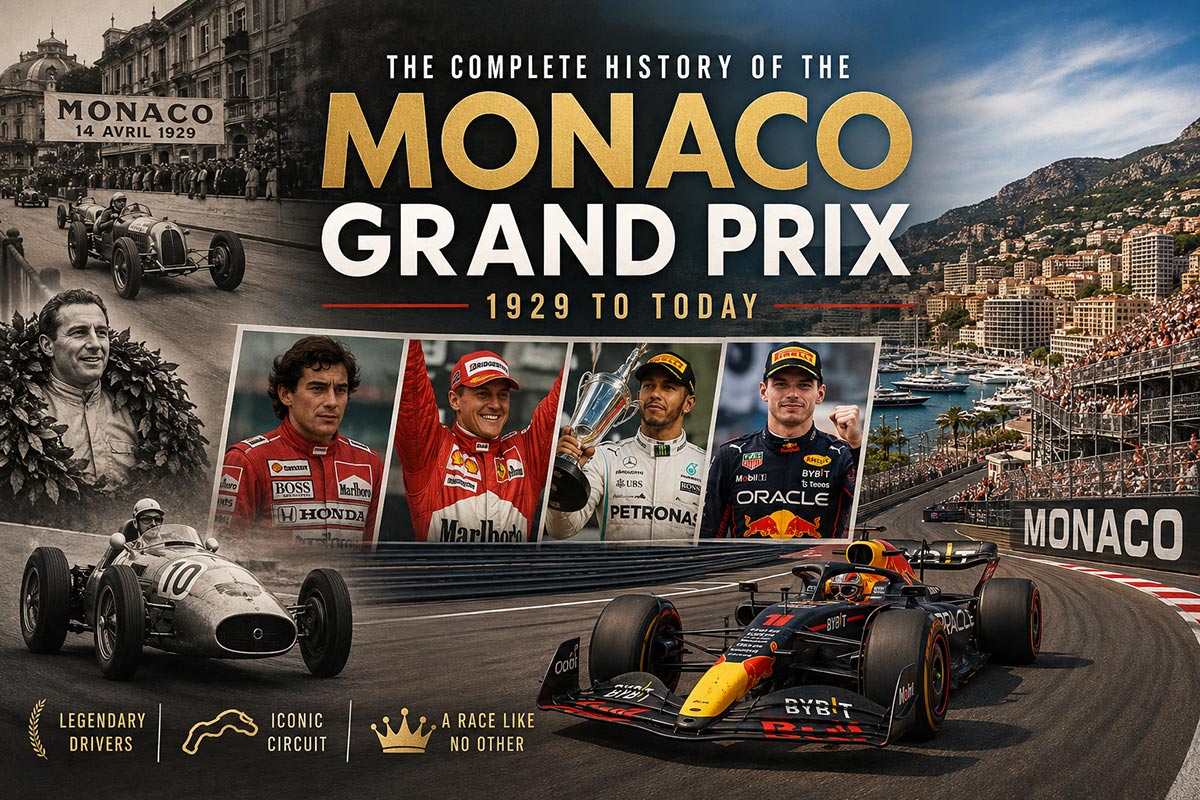
The Complete History of the Monaco Grand Prix
Introduction
Few sporting events in the world possess the prestige, glamour and tradition of the Monaco Grand Prix. Held annually on the narrow streets of Monte Carlo and La Condamine, the race has become synonymous with Formula One itself. Combining breathtaking scenery, world-class motorsport and unrivalled luxury, Monaco remains the event that every driver dreams of winning and every Formula One fan longs to experience.
Unlike purpose-built racing circuits, the Monaco Grand Prix takes place on public roads that wind through the heart of the Principality. Drivers race between harbour walls, luxury hotels, casinos and apartment buildings with almost no room for error. Every lap demands absolute precision, and the slightest mistake can end a driver’s race in an instant.
For nearly a century, Monaco has hosted some of the greatest names in motorsport, from Tazio Nuvolari and Juan Manuel Fangio to Graham Hill, Ayrton Senna, Michael Schumacher, Lewis Hamilton and Max Verstappen. Every generation has produced unforgettable moments around the famous street circuit, helping establish Monaco as the most iconic race on the Formula One calendar.
Today, the Monaco Grand Prix is one of the three events that make up motorsport’s famous Triple Crown, alongside the Indianapolis 500 and the 24 Hours of Le Mans. Winning all three remains one of the rarest achievements in motorsport history.
The Origins of the Monaco Grand Prix
The story of the Monaco Grand Prix begins long before Formula One itself existed.
Monaco, a tiny principality on the French Riviera, had already established itself as a destination for Europe’s wealthy elite during the late nineteenth century. Its famous casino, luxurious hotels and Mediterranean climate attracted royalty, celebrities and aristocrats from across Europe.
By the early 1900s, the popularity of motor racing was growing rapidly. The Automobile Club de Monaco (ACM), originally known as the Sport Automobile et Vélocipédique de Monaco, organised rallies throughout Europe, including what would become the famous Monte Carlo Rally.
However, despite organising successful rallies, Monaco was not recognised internationally as a major racing nation because it lacked a dedicated circuit.
Antony Noghès, son of the Automobile Club’s president Alexandre Noghès, believed Monaco could create something unique by using the Principality’s existing streets as a race circuit.
It was an ambitious idea.
Many doubted whether racing through narrow public roads lined with buildings, kerbs and harbour walls could ever work safely. Yet with support from Prince Louis II and the Automobile Club de Monaco, preparations began for what would become one of motorsport’s greatest events.
The First Monaco Grand Prix – 1929
On 14 April 1929, the inaugural Monaco Grand Prix took place.
The circuit measured just over 3 kilometres and already featured many roads still used today. Drivers negotiated steep climbs, tight corners and sweeping descents through Monte Carlo before returning alongside the harbour.
The event immediately captured public imagination.
Thousands of spectators lined balconies, rooftops and pavements to watch Europe’s finest racing drivers tackle the challenging course.
The first winner was British driver William Grover-Williams, competing under the pseudonym “Williams”, driving a green Bugatti Type 35B.
His victory marked the beginning of one of motorsport’s greatest traditions.
Unlike many racing circuits built in open countryside, Monaco placed the action directly in front of hotels, cafés and apartments, creating an atmosphere unlike anything seen before.
Even in its earliest years, the race became associated with glamour, sophistication and exclusivity.
Building an International Reputation
Throughout the 1930s, Monaco rapidly established itself as one of Europe’s premier motor races.
The event attracted many of the greatest pre-war drivers, including:
- Rudolf Caracciola
- Tazio Nuvolari
- Luigi Fagioli
- Achille Varzi
- Louis Chiron
Perhaps no driver became more closely associated with Monaco before Formula One than Louis Chiron.
Born in Monaco itself, Chiron became one of the country’s greatest sporting heroes and remains the only Monégasque driver ever to win the Monaco Grand Prix.
His success helped cement the race’s importance for the Principality, and today one of Monaco’s famous corners bears his name.
As racing technology improved throughout the decade, speeds increased dramatically, yet Monaco remained one of the most technically demanding races on the calendar.
Drivers needed bravery, precision and exceptional concentration rather than simply outright speed.
Those qualities continue to define Monaco nearly a century later.
Monaco and the Second World War
Like much of Europe, international motorsport came to a halt during the Second World War.
Between 1938 and 1947, the Monaco Grand Prix was not held as racing activities across the continent were suspended.
Following the war, organisers worked hard to revive the event.
The return of international racing symbolised optimism and rebuilding across Europe, and Monaco once again welcomed competitors from around the world.
The first post-war Monaco Grand Prix took place in 1948, attracting enormous public interest.
Although the circuit remained largely unchanged, racing machinery had advanced considerably, making the challenge even greater.
Monaco Joins the Formula One World Championship
Formula One officially began in 1950.
Monaco immediately became one of the seven races included in the inaugural Formula One World Championship.
This cemented the Principality’s place in sporting history.
The very second Formula One World Championship race ever held was the Monaco Grand Prix.
Italian legend Giuseppe Farina had won the opening race at Silverstone, while Monaco provided a completely different challenge just weeks later.
The 1950 race is remembered for one of Formula One’s earliest dramatic incidents.
On the opening lap, several drivers crashed in spectacular fashion after encountering sea spray entering Tabac Corner.
Nearly half the field was eliminated in what became one of Formula One’s first major multi-car accidents.
Argentinian superstar Juan Manuel Fangio expertly avoided the chaos to secure victory.
His masterful drive demonstrated exactly why Monaco rewarded intelligence and racecraft above outright aggression.
Fangio and the Golden Age
During the 1950s, Formula One entered what many consider its first golden era.
Juan Manuel Fangio dominated the decade, winning five World Championships while competing against some of the sport’s greatest talents.
His performances around Monaco became legendary.
Driving powerful front-engined machines with minimal safety equipment demanded extraordinary courage.
There were no run-off areas.
No TecPro barriers.
No sophisticated crash structures.
Only stone walls, buildings and harbour railings.
Every lap required total commitment.
The Monaco Grand Prix became the ultimate test of a driver’s precision.
Many champions regarded simply finishing the race as an achievement.
Winning it elevated drivers into motorsport folklore.
Safety Improvements and Circuit Evolution
As Formula One evolved throughout the 1950s and 1960s, Monaco also began adapting.
Although organisers wanted to preserve the unique character of the street circuit, improvements became necessary as cars grew faster.
Protective barriers were strengthened.
Marshal posts were improved.
Medical facilities expanded.
Escape roads and safety measures slowly increased while maintaining the circuit’s famous layout.
Unlike many historic circuits that underwent complete redesigns, Monaco carefully balanced tradition with modern safety requirements.
This preservation is one reason why today’s drivers still race through many of the same streets used nearly one hundred years ago.
Graham Hill – Mr Monaco
The 1960s saw one driver become almost synonymous with Monaco.
Britain’s Graham Hill mastered the unique demands of the circuit better than anyone before him.
Between 1963 and 1969, Hill won the Monaco Grand Prix five times.
His remarkable consistency earned him the nickname “Mr Monaco.”
Hill understood that patience was often more valuable than aggression.
Rather than attacking every corner, he drove with extraordinary smoothness, preserving both his tyres and concentration over race distance.
His success inspired future generations and established a benchmark that would stand for decades.
Beyond Monaco, Hill also became the only driver in history to complete motorsport’s Triple Crown by winning:
- The Monaco Grand Prix
- The Indianapolis 500
- The 24 Hours of Le Mans
His achievements elevated Monaco’s reputation even further, reinforcing its place as one of the world’s greatest sporting events.
The Rise of Formula One’s Biggest Stars
Throughout the late 1960s and into the 1970s, Monaco continued producing unforgettable races.
The circuit welcomed legends including:
- Jackie Stewart
- Emerson Fittipaldi
- Niki Lauda
- James Hunt
- Ronnie Peterson
- Jody Scheckter
Each generation discovered that Monaco demanded a different approach from every other Grand Prix.
Drivers often described qualifying around Monaco as one of the greatest adrenaline experiences in motorsport.
With barriers just inches away, every lap required absolute perfection.
Pole position became increasingly important because overtaking on the narrow circuit remained exceptionally difficult.
As television coverage expanded worldwide during the 1970s, millions of viewers became captivated by Monaco’s unique combination of speed, danger and glamour.
The spectacular images of Formula One cars racing past luxury yachts, elegant hotels and the famous Casino Square helped transform the Monaco Grand Prix into the sport’s global showcase.
By the end of the decade, Monaco had firmly established itself as the most prestigious race in Formula One—a reputation it continues to enjoy today.
The Senna Era – The King of Monaco
If one driver has become inseparable from the Monaco Grand Prix, it is Ayrton Senna. Widely regarded as one of the greatest Formula One drivers of all time, Senna’s extraordinary performances around the streets of Monte Carlo elevated him to legendary status.
Senna first tasted victory in Monaco in 1987 with Lotus, but it was his move to McLaren that truly established his dominance. Between 1989 and 1993, he won the race five consecutive times, demonstrating an unmatched level of precision and commitment on the narrow street circuit.
His total of six Monaco Grand Prix victories remained the benchmark for decades and earned him the title “King of Monaco.”
Perhaps his greatest qualifying performance came in 1988. Senna was so completely in tune with the circuit that he out-qualified teammate Alain Prost by over 1.4 seconds—a staggering margin considering both drivers were in identical McLaren-Honda cars. Senna later described entering a state where he felt he was driving beyond conscious control, producing one of the most remarkable qualifying laps in Formula One history.
Ironically, after dominating the race, Senna crashed at Portier while leading comfortably. It remains one of the sport’s most famous examples of how Monaco punishes even the smallest lapse in concentration.
To this day, many Formula One fans consider Senna’s Monaco performances the finest displays of driving skill ever witnessed.
Schumacher, Hamilton and the Modern Greats
Following Senna’s era, another multiple World Champion left his mark on Monaco.
Michael Schumacher claimed five victories in Monte Carlo between 1994 and 2001, matching Graham Hill’s long-standing record before eventually being surpassed by Lewis Hamilton in overall Formula One victories.
Schumacher’s meticulous preparation and exceptional qualifying speed made him almost unbeatable on street circuits. His precision through the Swimming Pool section, the Tunnel and Sainte Dévote demonstrated why Monaco rewards technical excellence above outright aggression.
Fernando Alonso also enjoyed memorable success, winning in both 2006 and 2007 during the peak of his rivalry with Schumacher.
Lewis Hamilton eventually added Monaco victories to his remarkable Formula One career, while Nico Rosberg achieved three consecutive wins between 2013 and 2015, following in the footsteps of his father Keke Rosberg, who had also won the race.
More recently, Max Verstappen has become another Monaco winner, demonstrating the same qualities shared by all great Monaco champions: patience, precision and consistency.
Despite enormous advances in technology, Monaco continues to reward driver ability perhaps more than any other circuit on the Formula One calendar.
The Evolution of the Monaco Circuit
Although Monaco remains instantly recognisable, the circuit has evolved considerably over the decades.
The original 1929 layout measured just over 3 kilometres. Today’s circuit is approximately 3.337 kilometres (2.074 miles) long and features 19 corners, many of which have become legendary in motorsport.
While Formula One cars have become significantly larger and faster, organisers have carefully modernised the circuit without losing its historic character.
Notable developments include:
- Improvements to harbour facilities.
- Modified pit lane and paddock complexes.
- Enhanced safety barriers.
- Modern medical facilities.
- Larger run-off areas where possible.
- Improved marshal posts.
One of the biggest changes came in 2004 when the pit complex was extensively redeveloped to provide modern Formula One teams with improved facilities while preserving Monaco’s unique atmosphere.
Unlike purpose-built circuits that have undergone dramatic redesigns, Monaco has successfully maintained its identity for nearly a century.
The Most Famous Corners in Formula One
Part of Monaco’s appeal lies in its unforgettable corners.
Sainte Dévote
The opening right-hander has witnessed countless first-lap incidents throughout Formula One history. Drivers fight aggressively for position before climbing towards Casino Square.
Beau Rivage
The uphill sweep towards Casino Square allows Formula One cars to accelerate rapidly while climbing through one of the circuit’s most scenic sections.
Casino Square
Passing directly in front of the famous Casino de Monte-Carlo, this section perfectly captures the glamour associated with Monaco.
Fairmont Hairpin
Formerly known as Loews Hairpin, this is the slowest corner in Formula One. Cars reduce speed to around 30 mph (48 km/h), making it one of the best spectator viewing points.
The Tunnel
Unique in Formula One, the Monaco tunnel presents one of the circuit’s greatest challenges as drivers transition instantly from darkness into bright Mediterranean sunshine before heavy braking for the Nouvelle Chicane.
Swimming Pool Complex
Among the fastest and most spectacular sections of the circuit, drivers thread their cars between barriers with incredible precision through rapid direction changes.
Rascasse and Anthony Noghès
The final corners demand patience before accelerating onto the start-finish straight. A mistake here can ruin an otherwise perfect lap.
Famous Monaco Grand Prix Moments
The Monaco Grand Prix has produced countless unforgettable moments.
Some of the most memorable include:
1929 – The Beginning
William Grover-Williams wins the inaugural Monaco Grand Prix driving a Bugatti.
1950 – Formula One Arrives
Monaco hosts one of the very first Formula One World Championship races.
1965 – Graham Hill’s Dominance
Hill secures another Monaco victory, strengthening his reputation as “Mr Monaco.”
1982 – One of Formula One’s Craziest Finishes
During torrential rain, several leaders crashed or suffered mechanical failures in the closing laps. Riccardo Patrese eventually inherited victory after briefly spinning himself.
1984 – Senna Announces Himself
Driving a modest Toleman in heavy rain, Ayrton Senna charged through the field and was rapidly catching race leader Alain Prost before the race was controversially stopped.
Many believe Senna would have taken his first Formula One victory that afternoon.
1988 – The Perfect Lap
Senna’s qualifying performance remains one of Formula One’s greatest ever laps.
1996 – Chaos in Monte Carlo
Only three cars finished one of the most dramatic Monaco Grands Prix ever held. Olivier Panis claimed an unforgettable victory from 14th on the grid—the last French winner of a Formula One Grand Prix for many years.
2025 – Two Mandatory Pit Stops
Formula One introduced two mandatory pit stops in an attempt to create more strategic variation around Monaco’s difficult-to-overtake circuit. The race generated considerable debate throughout the paddock and among fans.
Why Winning Monaco Means So Much
Ask almost any Formula One driver which race they most want to win, and Monaco will almost always be near the top of the list.
Victory here represents far more than simply scoring championship points.
It signifies mastering one of the most technically demanding circuits ever created.
Unlike many modern tracks with wide run-off areas, Monaco leaves virtually no room for mistakes. Every lap requires complete concentration, millimetre-perfect accuracy and supreme confidence.
Many drivers consider a Monaco victory equal in prestige to winning the Formula One World Championship itself.
For this reason, Monaco forms part of motorsport’s famous Triple Crown alongside:
- The Monaco Grand Prix
- The Indianapolis 500
- The 24 Hours of Le Mans
Only Graham Hill has completed this extraordinary achievement.
Monaco Beyond the Racing
The Monaco Grand Prix is unique because the experience extends well beyond the circuit itself.
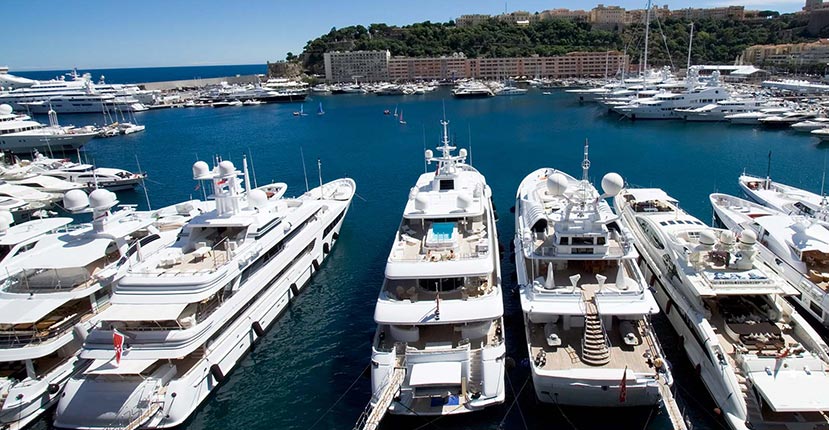
Throughout race week, Monte Carlo becomes one of the world’s premier entertainment destinations.
Visitors enjoy:
- Luxury yacht parties.
- Michelin-starred dining.
- Rooftop hospitality.
- Designer shopping.
- Exclusive cocktail bars.
- World-famous casinos.
- Live entertainment.
- Supercar displays.
- Luxury hotels overlooking the harbour.
The atmosphere throughout the Principality is unlike any other Formula One destination, attracting celebrities, royalty, business leaders and motorsport enthusiasts from every corner of the globe.
The Monaco Grand Prix Today
Nearly one hundred years after the inaugural race, the Monaco Grand Prix remains the crown jewel of Formula One.
Although Formula One has expanded to new destinations around the world, no race possesses Monaco’s unique blend of history, glamour and sporting significance.
Each year, organisers continue the remarkable task of transforming ordinary public roads into one of the world’s most famous racing circuits. The process takes approximately six weeks to construct and several weeks to dismantle, highlighting the incredible logistical effort required to stage the event.
The challenge remains largely unchanged: drivers must deliver absolute perfection around barriers that leave no room for error, while spectators enjoy some of the finest hospitality experiences available anywhere in world sport.
Conclusion
The history of the Monaco Grand Prix is the story of Formula One itself.
From Antony Noghès’ ambitious vision in the 1920s to today’s spectacular world championship events, Monaco has remained the benchmark against which all other Grands Prix are measured.
Legends such as Fangio, Graham Hill, Ayrton Senna, Michael Schumacher, Lewis Hamilton and Max Verstappen have all added their names to the race’s remarkable history, but the essence of Monaco has never changed. It is still a race won through courage, precision and determination.
For spectators, there is simply no substitute for experiencing the Monaco Grand Prix in person. Watching Formula One cars race through the streets of Monte Carlo from a luxury balcony, exclusive yacht or VIP hospitality suite is an unforgettable experience that combines elite motorsport with the glamour of the French Riviera.
Whether you are a lifelong Formula One fan or planning your first Grand Prix weekend, Monaco continues to offer the ultimate Formula One experience. Its rich history, legendary champions and unrivalled atmosphere ensure that it remains, and is likely always to remain, the most iconic race on the Formula One calendar.