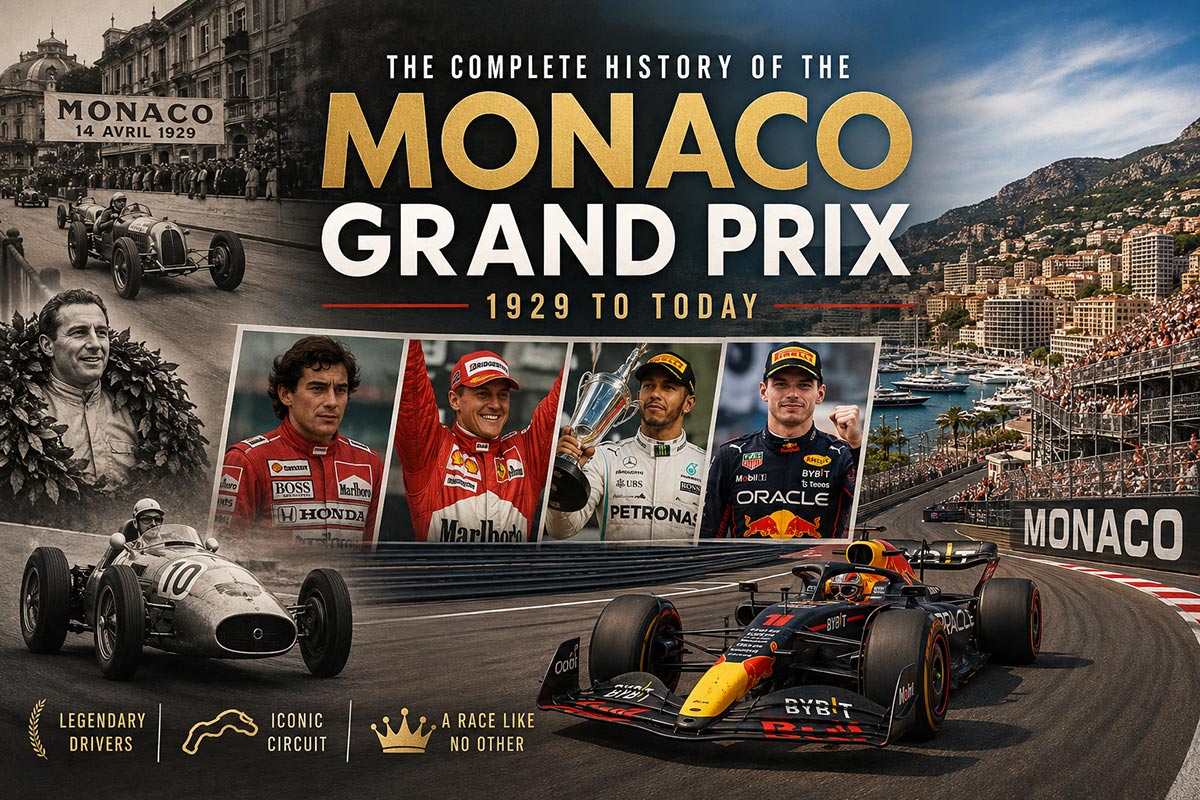
The Monaco GP Circuit
The Monaco Grand Prix is one of the most iconic sporting events in the world and a true highlight of the Formula 1 calendar. Held on the narrow streets of Monte Carlo and La Condamine, the Circuit de Monaco is unlike any other track on the championship. Precision, confidence and bravery are rewarded here, while the smallest mistake can end a driver’s race in an instant.
For spectators, Monaco offers an unforgettable combination of world-class motorsport, luxury yachts, glamorous hospitality and spectacular Mediterranean scenery. Whether you are watching from a grandstand, private balcony, yacht or hospitality suite, every lap is packed with excitement as the world’s best drivers tackle one of Formula 1’s greatest challenges.
Circuit Overview
Unlike permanent racing circuits, Monaco is constructed from the public roads that wind through the Principality. The barriers are incredibly close to the racing line, leaving almost no margin for error.
Although average speeds are lower than at many Formula 1 venues, Monaco remains one of the toughest races of the season due to its relentless sequence of tight corners and constant concentration required over the entire race distance.
The circuit rewards drivers who can qualify well, maintain rhythm and avoid mistakes.
Circuit Facts
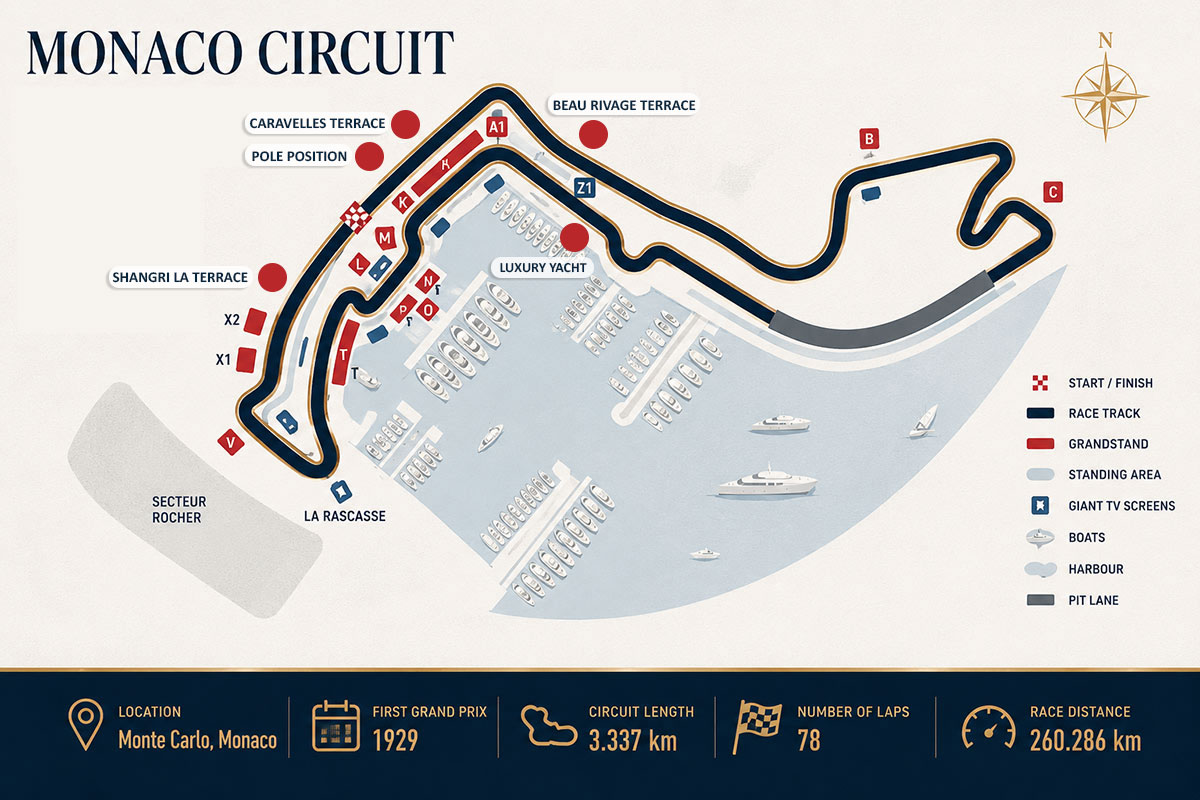
Circuit Name: Circuit de Monaco
Location: Monte Carlo, Monaco
First Formula 1 Grand Prix: 1950
Circuit Length: 3.337 km (2.074 miles)
Race Distance: 78 laps
Total Race Distance: 260.286 km
Lap Record: Lewis Hamilton – 1:12.909 (2021)
Direction: Clockwise
Circuit Layout
The Circuit de Monaco features a unique blend of slow-speed corners, rapid elevation changes and famous landmarks.
The lap includes:
- Start/Finish Straight
- Sainte Dévote
- Beau Rivage hill climb
- Massenet
- Casino Square
- Mirabeau
- Grand Hotel Hairpin
- Portier
- Tunnel
- Nouvelle Chicane
- Tabac
- Swimming Pool Complex
- La Rascasse
- Anthony Noghes
Every section demands absolute precision, with barriers lining almost every metre of the circuit.
Famous Corners
Sainte Dévote (Turn 1)
The opening corner is one of the best overtaking opportunities around Monaco.
Drivers brake hard after the start before immediately climbing Beau Rivage towards Casino Square. Incidents are common during the opening lap as the field squeezes together into the tight right-hander.
Casino Square
Perhaps the most recognisable section of the circuit.
Cars sweep past the famous Casino de Monte-Carlo before descending downhill towards Mirabeau. The elevation changes and surrounding architecture create one of Formula 1’s most photographed locations.
Grand Hotel Hairpin
Formerly known as Loews Hairpin and Fairmont Hairpin.
This is the slowest corner in Formula 1, often taken at little more than 30 mph (50 km/h). Drivers use maximum steering lock as they negotiate the incredibly tight left-hand bend.
It provides one of the best opportunities for spectators to appreciate the incredible steering angle of a modern Formula 1 car.
Tunnel
One of Monaco’s defining features.
Drivers accelerate through the only tunnel on the Formula 1 calendar before emerging into bright daylight and immediately braking for the Nouvelle Chicane.
The dramatic change in lighting makes this one of the most technically demanding sections of the lap.
Swimming Pool Complex
Fast direction changes between close barriers make this one of the most spectacular parts of the circuit.
Modern Formula 1 cars attack the kerbs with incredible precision as they thread through the left-right sequence before heading towards La Rascasse.
La Rascasse
A tight right-hand corner that often produces dramatic qualifying laps and strategic battles during the race.
Drivers must carefully manage traction before accelerating towards the final corner.
Overtaking at Monaco
Monaco is widely regarded as the most difficult circuit on the Formula 1 calendar for overtaking.
Track position is incredibly important, making qualifying one of the most crucial sessions of the entire season.
The main passing opportunities include:
- Sainte Dévote
- Nouvelle Chicane after the tunnel
However, strategy, pit stops, safety cars and changing weather conditions frequently influence the final result.
Qualifying Is Everything
Because overtaking is so challenging, Saturday qualifying often proves just as important as Sunday’s race.
Pole position provides a huge advantage, allowing drivers to control the pace and reduce the risk of becoming trapped in traffic.
Many legendary Monaco victories have been built on exceptional qualifying performances.
Race Strategy
Monaco regularly produces fascinating tactical battles.
Teams must carefully balance:
- Tyre management
- Pit stop timing
- Safety Car periods
- Virtual Safety Cars
- Traffic management
- Weather conditions
Even a perfectly executed race can be won or lost during a pit stop.
Weather Conditions
Late May on the French Riviera usually provides warm, pleasant conditions.
Typical temperatures range between 20°C and 27°C, although occasional rain showers can completely transform the race.
Wet Monaco Grands Prix are often among the most dramatic races of the Formula 1 season.
Best Places to Watch
Monaco offers some of the most unique viewing experiences in world motorsport.
Popular viewing locations include:
Casino Square
Perfect for watching the cars sweep through one of Formula 1’s most glamorous settings.
Harbour
Enjoy stunning views of the yachts alongside the circuit while watching cars accelerate towards the tunnel.
Swimming Pool
One of the fastest and most exciting spectator areas.
Grandstands
Purpose-built grandstands provide excellent views across key overtaking zones and famous corners.
Private Balconies
A signature Monaco experience offering elevated views, gourmet hospitality and premium race-day comfort.
Yacht Hospitality
Watch Formula 1 from luxury yachts moored in Monaco Harbour, combining exceptional racing views with fine dining and entertainment.
Visiting Monaco for the Grand Prix
The Monaco Grand Prix is much more than a Formula 1 race.
Visitors can enjoy:
- Luxury hotels
- Michelin-star restaurants
- Designer shopping
- Monte Carlo Casino
- Superyachts
- Mediterranean coastline
- Historic Old Town
- Fine dining
- Evening entertainment
Many visitors extend their stay to explore nearby Nice, Cannes and the French Riviera.
Why Monaco Remains Formula 1’s Crown Jewel
Few sporting events combine prestige, history and glamour quite like the Monaco Grand Prix.
From legendary qualifying laps to breathtaking harbour views, every moment of the weekend delivers an unforgettable experience.
Whether you’re a lifelong Formula 1 fan or attending your very first Grand Prix, Monaco offers an atmosphere unlike anywhere else on the racing calendar.
Frequently Asked Questions
How long is the Monaco Formula 1 circuit?
The Circuit de Monaco measures 3.337 kilometres (2.074 miles).
Why is Monaco so difficult?
Its narrow streets, close barriers, elevation changes and lack of overtaking opportunities make it one of the toughest circuits in Formula 1.
Is Monaco the slowest Formula 1 circuit?
Yes. Despite its low average speed, it remains one of the most technically demanding tracks on the calendar.
Which is the slowest corner?
The Grand Hotel Hairpin is the slowest corner in Formula 1.
Is qualifying important at Monaco?
Extremely. Pole position often plays a major role in determining the race winner.
Can spectators walk the circuit?
Yes. Outside of race weekend, the roads are open to normal traffic and visitors can walk much of the famous circuit.
Come and enjoy the Monaco Grand Prix with us at GPA
If the Circuit de Monaco has inspired you to experience Formula 1’s most prestigious race in person, explore our range of Monaco Grand Prix Packages. From premium grandstands and exclusive trackside hospitality to luxury hotels, private transfers, yacht experiences and VIP balcony viewing, our packages are designed to make your Monaco Grand Prix weekend unforgettable. With over 20 years of experience delivering Formula 1 travel experiences, our team will help you find the perfect package to suit your budget and create memories that last a lifetime.